
New Construction
Pre-Construction & Project Planning Approach
Perform an initial evaluation of project documentation, including plans, specifications, and overall design intent, to align roofing solutions with project requirements
Conduct a detailed site and structural assessment to develop a roofing system design that meets performance expectations, code requirements, and budget parameters
Review building usage and operational needs to ensure the selected roofing system supports long-term functionality and durability
Evaluate energy efficiency objectives, drainage and stormwater management, environmental exposure, and safety considerations when determining the appropriate roofing solution
Coordinate closely with ownership, consultants, and project stakeholders to deliver the project on schedule while maintaining required quality standards and safety protocols
Coomercial Roof Types
Single Ply
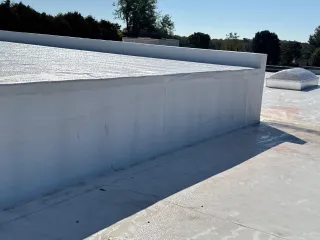
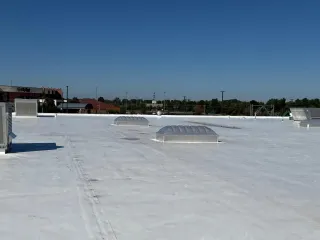
Single-ply roofing systems use prefabricated membrane sheets—commonly TPO, PVC, or EPDM—installed on low-slope roofs using fully adhered, mechanically attached, or ballasted methods. These systems are valued for their long service life, resistance to UV exposure, and efficient installation process. With strong thermal performance and proven reliability, single-ply roofing is widely used in commercial and light industrial applications.
Modified Bitumen
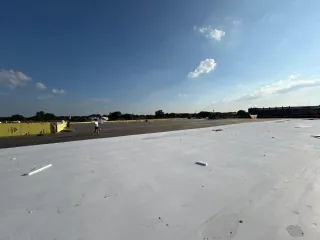
Modified bitumen roofing is an asphalt-based system strengthened with polymer modifiers such as SBS or APP and installed in rolled sheets. It offers multiple application methods—including torch-applied, cold-applied, self-adhered, and heat-welded—allowing flexibility for different project requirements. Known for its strength, adaptability in varying temperatures, and reliable weather performance, this system provides long-lasting protection for commercial buildings.
Build-Up Roofing (BUR)
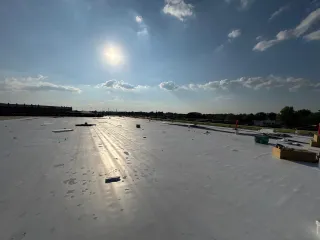
Built-up roofing (BUR) systems are constructed using multiple layers of asphalt and reinforcing felts, finished with a protective aggregate surfacing such as gravel or stone. This long-established roofing method delivers strong water resistance, shields the membrane from ultraviolet exposure, and performs reliably on low-slope roofs. Its layered construction provides added durability, making it well suited for large commercial and industrial facilities.
Metal Roofing
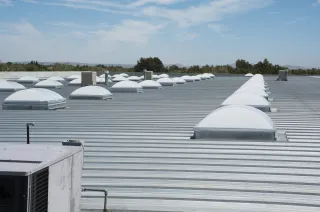
Metal roofing systems are constructed from panels fabricated from materials such as steel, aluminum, copper, or zinc-based alloys. The panels are designed to interlock or overlap and are offered in profiles including standing seam, corrugated, and ribbed styles. Known for their long service life, minimal maintenance requirements, fire resistance, and recyclability, metal roofs provide a durable and sustainable solution for commercial buildings.
Daylighting
Daylighting systems incorporate natural light elements—such as skylights, tubular daylight devices, and roof monitors—directly into the roof assembly. By increasing the amount of natural light indoors, these systems help lower energy usage by reducing reliance on artificial lighting. Designed for compatibility with both low-slope and steep-slope roofs, daylighting solutions improve interior comfort, support occupant productivity, and contribute to overall building sustainability.
Contact Us
3000 Beechwood Industrial Ct, Hubertus